おすすめのインターネット回線4選!お得なインターネットの選び方も解説

生活に欠かせないサービスとなっているインターネットですが、回線によって良し悪しは分かれるものです。
よって、明確なコンセプトのもとでサービスを選ばないと失敗します。
では、おすすめのインターネット回線にはどのようなものがあるのでしょうか?
ここでは、インターネット回線の選び方や、具体的におすすめしたい回線について紹介します。
おすすめのインターネット回線とは?
インターネット回線は、多くの企業が参入しており目移りするものですが、あくまでも自分自身に合うところを選ばないと失敗する可能性が高いです。
また、大きくサービス内容は違わないので人気などのファクターで選びがちですが、実は微妙にサービス内容が異なるものです。
これによって、料金が高くなることもありますし、月額料金が安いからと言って選ぶと希望するオプションが付いていなかったりします。
以上から、慎重かつ様々な要素を加味して、インターネット回線を選ぶことが重要です。
おすすめのインターネット回線の選び方
インターネット回線を選ぶ際に重視したいポイントとしては、以下の4項目があります。
スマホとのセット割で選ぶ
インターネット回線の中で、大手携帯キャリアが提供しているものがあり、そのキャリアのスマートフォンを保有している場合、セット割引が適用されてとてもお得です。
代表的なものとしては、auひかりのスマートバリューがあります。
スマートバリューは、auの光回線を契約してauで契約しているスマホがあれば、割引サービスを適用できます。
割引額はケータイやスマホの定額プランの種類によって異なりますが、最大で1人あたり毎月2,000円割引が適用できるのです。
もし5人家族で全員がauのスマホを契約している場合、1世帯で月10,000円の割引となるので、大きな恩恵を受けることができます。
ソフトバンクユーザーの場合、ソフトバンク光のおうち割というプランを利用すると、最大月1,000円の割引となります。
こちらも、家族の人数分が適用されるので、人数が多ければ多いほど割引額が大きくなるのです。
以上のプランを利用するためには、機器のレンタルが必要であったり特定のオプションに加入しなければならない制限があります。
これによって、月額料金がアップすることもあるのですが、この割引を加味すれば実質的に魅力的なオプションを無料で使用できるのです。
このような観点で、契約しているスマホのキャリアに合わせてお得になる、おすすめのインターネット回線も紹介していきます。
工事費無料で選ぶ
インターネット回線を利用する際に必要となる、高額な工事費を負担してくれる会社を選ぶというのも有効的です。
通常、インターネット回線を新たに導入する場合、基本的に屋内配線工事が必要となり工事費は18,000円~が目安となります。
賃貸住宅などで、以前住んでいた方と同じ回線を使うケースでは屋内配線工事が不要となり、工事費が安くなることもあります。
工事費用は、マンション用の15,000円が目安となりますが、やはり高い費用が発生します。
ですが、工事費用は必ずどの会社でも請求されるわけではなく、中には無料のケースもあります。
例えば、工事費が無料になるキャンペーンを実施しているケースです。高額な工事費が完全無料になったり実質無料になったりするので、このようなキャンペーンを基準にインターネットを選ぶのもいいでしょう。
キャンペーンで選ぶ
各インターネット回線では、より多くのユーザーを獲得しようと各種のキャンペーンを開催しています。
例えば、先に紹介した工事費を免除するものであったり、基本料を無料にしたり高速インターネット回線に対応したWi-Fiルーターがプレゼントされるなどがあります。
他にも、特定プランに同時加入すると基本料が割引になったり、引っ越しシーズンでは乗り換え時に発生する解約金を免除してくれるなども存在しています。
「引っ越し工事費無料」など、すでに回線を利用されている方に向けたキャンペーンも用意している会社もあるので、その点も加味して選ぶのも有効的です。
こちらのサイトでも、安くておすすめのネット回線が紹介されています ▶
申し込み時のキャッシュバックで選ぶ
キャンペーンと同時に、インターネット回線だけでなく代理店のお得なキャッシュバックを受けることもできます。
各代理店によって、キャッシュバック額は大きく異なるのですが、中には4万円を超えるキャッシュバックが用意されてるケースもあるのです。
基本的には現金振り込みでのキャッシュバックとなりますが、家電量販店などでは商品券でのキャッシュバックになることもあります。
確かにお得感があるのですが、キャッシュバックの申請方法が複雑であったり、1年後に申請しなければならない場合もあるのです。
これによって、せっかくのキャッシュバックが適用されない可能性もあるので要注意です。
単にキャッシュバック額だけで選ぶのではなく、申請の容易さなどを加味して選択しましょう。
おすすめのインターネット回線4選
ここでは、選び方で紹介した要素を加味した上で、特におすすめのインターネット回線を4つ紹介します。
ソフトバンク光
| 料金 | 1ギガ:5,200円 10ギガ:6,300円 |
| 1ギガ:3,800円 | |
| 工事費 | 2,000~24,000円→乗り換えで無料 |
| スマホセット割 | あり |
| 乗り換えキャンペーン | あり |
| キャッシュバック金額 | 最大33,000円 |
ソフトバンク光は、ソフトバンクユーザーに特におすすめのインターネット回線です。
おうち割で毎月最大1,000円の割引が可能で、またキャンペーンも頻繁に開催されており、お得感があります。
キャンペーンも充実しており、他社からの乗り換えもしやすい点も評価できます。
おすすめの申し込み先
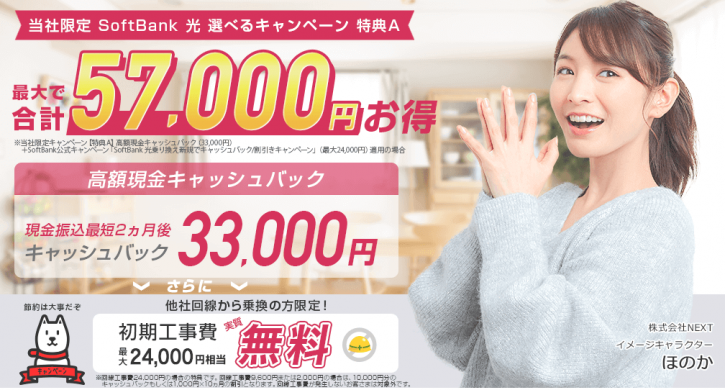
NEXTでは、ソフトバンク光を申し込むと最大33,000円の現金をキャッシュバックしてくれます。
または、28,000円と最新WiFiルーター、もしくは任天堂Switchのプレゼントを選択できるのも魅力的です。
なかなか手に入らないSwitchがプレゼントに入っているのが良いですね。
キャンペーンの申し込みは、申込み時の電話で伝えるだけで良い点も評価されています。
ビッグローブ光
| 料金 | ファミリータイプ:4,980円 |
| マンションタイプ:3,980円 | |
| 工事費 | 27,000~30,000円→キャンペーンで実質無料 |
| スマホセット割 | あり |
| 乗り換えキャンペーン | なし |
| キャッシュバック金額 | 最大26,000円 |
※上記は3年プランの場合
ビッグローブ光は、古くからインターネット回線サービスを展開しているビッグローブが手掛けています。
質の高いサービスが魅力的で、3年プランの場合は月額料がお得になります。
auスマホをお持ちの方はauスマートバリューまたはauセット割が適用されるので、さらにお得感が増します。
おすすめの申し込み先

NEXTでは、キャッシュバックが最大26,000円ととても高額です。
他社転用の場合でも、10,000円のキャッシュバックというのですからお得感があります。
また、3年プランに加入する場合は工事費も実質無料になります。
キャッシュバック還元率100%という安心感がある点も良いですね。
コミュファ光
| 料金 | 10GホームEX:6,350円 5GホームEX:6,000円 1Gホーム:5,550円 |
| 10GマンションEX:6,350円 5GマンションEX:6,000円 1Gマンション:5,550円 |
|
| 工事費 | 25,000円→キャンペーンで無料 |
| スマホセット割 | あり |
| 乗り換えキャンペーン | あり |
| キャッシュバック金額 | 30,000円 |
コミュファ光は、最速の10Gbpsのインターネットが楽しめるサービスです。
auスマホをお持ちの方はスマートバリューが利用できるので、月額を抑えることができます。
中部エリアのみの展開となりますが、高い顧客満足度を得ており地域密着なサービスを展開しています。
セキュリティ面も万全で、困ったときのサポート体制も充実しています。
おすすめの申し込み先
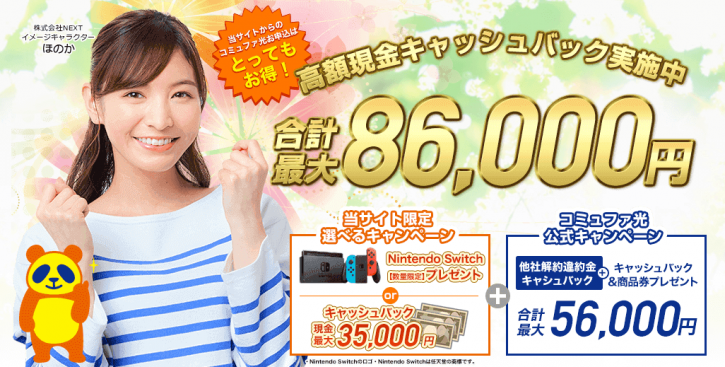
NEXTでは、現金30,000円キャッシュバックまたは任天堂Switchのプレゼントがもらえます。
さらに、公式キャペーンのオプションキャッシュバック15,000円や乗り換えキャンペーンの違約金負担もしてもらえるという内容です。
申し込みは電話で伝えるだけで良いのも魅力的です。
※ 今回、4選としてご紹介はしていませんが、auスマホをお持ちの方はスマートバリューが利用できるネット回線「auひかり」もおすすめです。
こちらもぜひチェックしてみてくださいね。

ソフトバンクAir
| 料金 | 4,880円 |
| 工事費 | 不要 |
| スマホセット割 | あり |
| 乗り換えキャンペーン | あり |
| キャッシュバック金額 | 30,000円 |
ソフトバンクAirは、他のインターネット回線と違ってターミナル端末ですぐにWiFiを楽しめるサービスです。
回線工事が不要で、届き次第利用できる点が評価されています。
頻繁に引っ越しされる方に向いていると言えますね。
難しい設定も不要で、またソフトバンクケータイ利用者の場合はおうち割も利用可能です。
おすすめの申し込み先
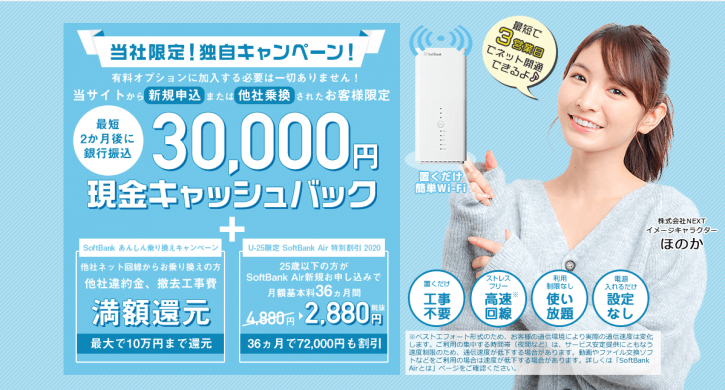
NEXTでは、現金30,000円キャッシュバックと、公式キャンペーンも適用できます。
ネット開通から2か月後~3か月後の間に必ず振り込まれますし、オプション加入も不要なので毎月負担がかかるようなことはありません。
まとめ
インターネット回線は、直接公式経由で申し込むのもよいですが、代理店経由で申し込むとより多くのキャッシュバックを得ることができます。
うまく活用して、よりお得にインターネットを楽しみたいですね。